June 27, 2026 · 12:17 AM
The coffee buffer: stop asking caffeine to do food's job
A practical guide to pairing coffee with a small protein-fiber-fat snack so caffeine is not asked to replace real workday fuel. Includes the five-window rhythm, coffee-friendly desk snack options, and zero-prep habits for preventing the 2-4 p.m. dip.

The problem is not coffee. It is coffee without a floor.
Coffee can be a useful part of a workday. For most adults, the FDA cites up to 400 milligrams of caffeine per day as an amount not generally associated with negative effects, while noting that sensitivity varies by person, medication, and health condition.1
The performance problem shows up when coffee becomes the whole morning strategy. Caffeine can make you feel more switched on, but it does not give your body the protein, fiber, or healthy fats that make a snack act like fuel. If your first real food is a pastry at 10:45 or a granola bar eaten between calls, you may be asking caffeine to cover a blood-sugar pattern that food should have handled earlier.
Today's move: keep the coffee, but add a small buffer around it.
The daily framework: five fuel windows
Think of the workday as five chances to prevent the afternoon dip before it starts. You are not trying to eat perfectly. You are trying to avoid long gaps followed by fast, lonely carbs.
| Window | What to do | Why it helps |
|---|---|---|
| 1. Wake-up anchor | Put one protein or fiber item within reach of your first coffee. | It keeps coffee from becoming the only morning input. |
| 2. Mid-morning buffer | Add a desk snack before hunger turns urgent. | High-fiber foods slow digestion and create a more gradual blood-sugar rise.2 |
| 3. Lunch anchor | Make lunch include protein plus plants, beans, or whole grains. | Harvard's Nutrition Source notes that fiber helps keep hunger and blood sugar in check, and adults need at least 25 to 35 grams per day.3 |
| 4. 2-4 p.m. rescue | Pair the craving item with a protein, fiber, or fat anchor. | A small mixed-meal study in 12 healthy adults found that rice eaten with protein, fat, and fiber produced a lower post-meal glucose response than rice alone.4 |
| 5. Shutdown bridge | If dinner will be late, add a small planned snack before leaving work. | You reduce the chance of arriving home depleted and eating whatever is fastest. |
Notice the pattern: the win is not a complicated meal plan. It is a better sequence.
The coffee buffer rule
Use your first or second coffee as a cue for food, not as a substitute for it.
A simple rule works well:
If coffee is going in, one small anchor goes beside it.
That anchor should include at least two parts of the Power Snack Formula: protein + fiber + healthy fats. All three are better, but two is enough to change the shape of the snack.
Why this works: Harvard's protein guidance emphasizes the whole "protein package," meaning the fiber, fats, sodium, and other nutrients that come with the protein source. A cup of cooked lentils, for example, provides protein and fiber; almonds provide protein with unsaturated fats and some fiber.5 For a busy professional, that means you do not need a perfect breakfast. You need a better package than coffee plus a refined carb.
Power Snack Formula: coffee-friendly desk options
Choose one of these before the day gets loud:
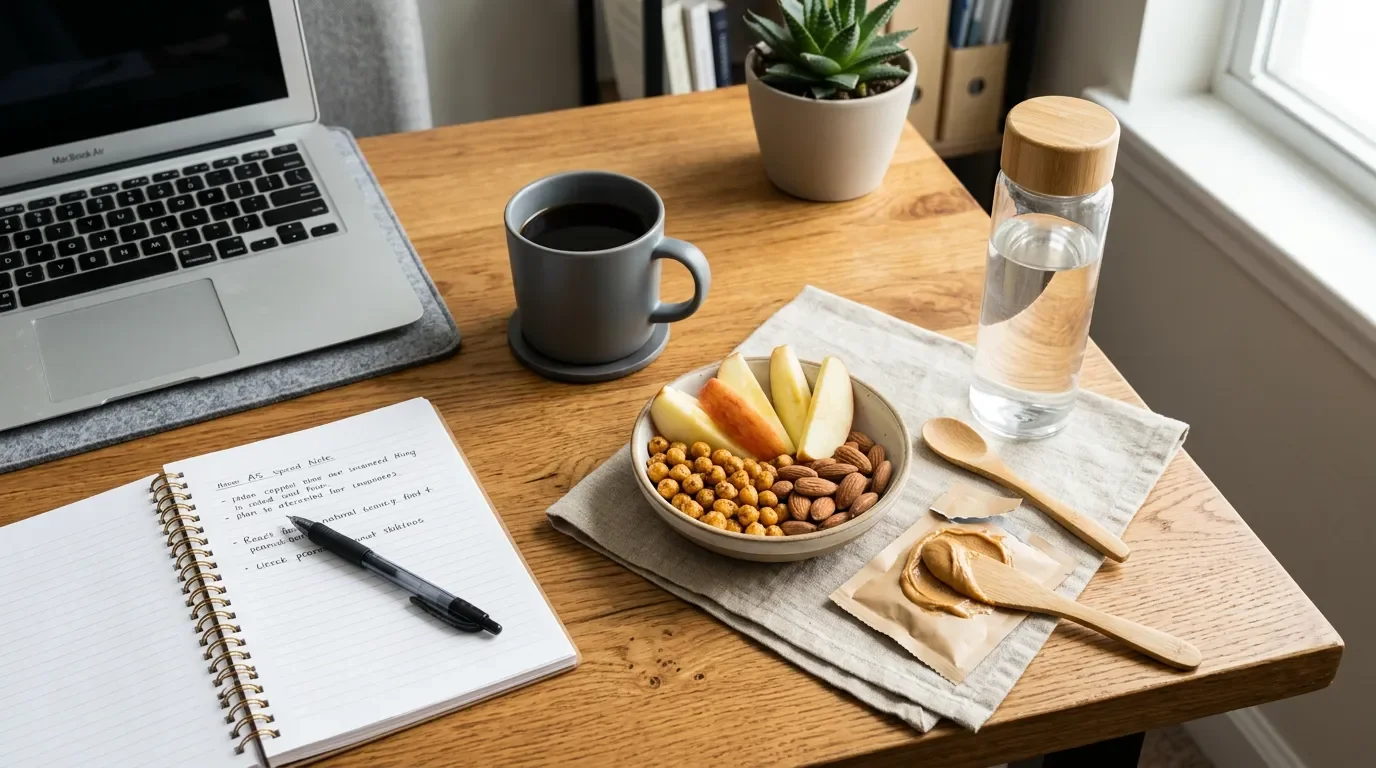
- 🥜 Apple + nut butter packet + roasted chickpeas: sweet, salty, fiber, protein, and fat without a refrigerator.
- 🧠 Plain instant oatmeal cup + chia or flax packet + almonds: useful when the office only has hot water.
- ⚡ Whole-grain crackers + tuna or salmon pouch + olive snack pack: more lunch-like, good for days with back-to-back meetings.
- 🥑 Shelf-stable edamame or roasted soybeans + fruit + pistachios: a quiet upgrade over candy from the shared bowl.
The point is not to eat more snacks all day. It is to stop letting a naked carb do solo work. A muffin, banana, or granola bar can fit, but it performs better when paired with protein, fiber, or fat.
Micro-habits that require no meal prep
Here are the structural changes I would use with a busy team before asking anyone to cook breakfast:
- Move the anchor next to the coffee. Put nut butter packets, roasted chickpeas, almonds, or tuna pouches in the same drawer as your coffee pods or mugs. A workplace choice-architecture study found that real worksites could implement practical strategies such as changing availability, position, prompts, and portions; 66% of evaluated implementation cases were rated successful in that 12-month feasibility study.6
- Pre-decide your default order. Coffee first is fine. Coffee plus anchor is better. Coffee plus pastry alone is the pattern to notice, not judge.
- Use a two-item minimum. If you grab fruit, add nuts. If you grab crackers, add tuna. If you grab yogurt from a cafe, add seeds or a small nut pack. This avoids turning snack advice into a willpower test.
- Protect the 2-4 p.m. window. If you know your crash usually hits after a long meeting block, place the snack where the meeting ends: bag, desk, car, or laptop sleeve.
- Keep caffeine honest. If your third coffee is really a hunger signal, try a buffer first. You may still want the coffee, but now it is a beverage choice rather than a rescue plan.
Today's one-minute reset
Before your next workday starts, build one coffee buffer:
- one protein item,
- one fiber item,
- one healthy-fat item,
- stored where your caffeine habit already happens.
No full meal prep. No moral scorekeeping. Just a better default at the moment your brain is already reaching for help.
What is your go-to sustained-energy snack to pair with coffee: nuts, yogurt, roasted chickpeas, tuna, oatmeal, or something else?
References
- 1Spilling the Beans: How Much Caffeine is Too Much?
- 2Carbohydrates and Blood Sugar
- 3Fiber
- 4Effect of nutrient composition in a mixed meal on the postprandial glycemic response in healthy people: a preliminary study
- 5Protein
- 6Choice Architecture Cueing to Healthier Dietary Choices and Physical Activity at the Workplace



Add more perspectives or context around this Post.