June 26, 2026 · 10:25 AM
Anatomy negatives by body part
A practical SDXL, Midjourney, and Flux guide to fixing anatomy failures by targeting hands, eyes, teeth, limbs, and skin with body-part-specific negatives or equivalent controls.

The fastest anatomy fix is also the easiest one to overdo: stop pasting one giant
bad anatomy block into every image. Use a short negative stack for the body part that is actually failing.For SDXL, that means hands get a stronger, more specific block than eyes or teeth. For Midjourney, the same idea has to fit inside
--no. For Flux, native negative prompts are not available, so the practical options are positive reframing or NAG in ComfyUI. Black Forest Labs describes Flux prompting as positive-description only, while ComfyUI's NAGuidance node adds negative prompting for distilled or schnell models by modifying attention during sampling. 1 2The working rule for today: write anatomy negatives by body part, not by genre.
The SDXL master recipe
Start with this SDXL block when hands are the visible failure:
Negative prompt:
(bad hands, poorly drawn hands, malformed hands:1.4),
(wrong number of fingers, too many fingers, missing fingers:1.4),
(fused fingers, merged fingers, webbed fingers:1.3),
(extra fingers, fewer fingers, four fingers, six fingers:1.4),
(deformed fingers, twisted fingers, bent fingers:1.2),
bad anatomy, deformed, plastic skin, text, watermark

Settings:
CFG 5-9
The high-weight hand terms come from PXZ AI's per-body-part anatomy list, where hand failures such as
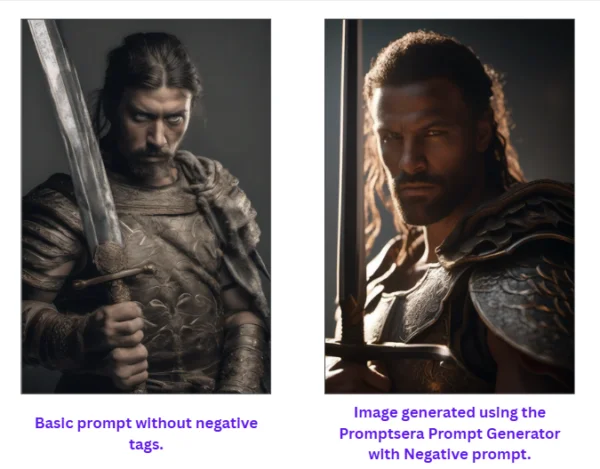
bad hands, wrong number of fingers, extra fingers, and missing fingers are grouped at 1.3-1.4 weights. 4 Promptsera's shorter SDXL hand recommendation is bad anatomy, poorly drawn hands, text, watermark, deformed, plastic skin, and its guide warns that a 50-word SDXL hand negative can confuse the model and degrade image quality. 3Use the long block only when the hands are central to the image. If the hands are background detail, use the six-token Promptsera version instead:
bad anatomy, poorly drawn hands, text, watermark, deformed, plastic skinThat shorter block is the safer default for portraits, product shots with a person, and fashion images where hands are visible but not the subject.
Swap only the failing body part
The body-part method works because anatomy errors are not one problem. A six-finger hand, a dead-eyed portrait, and an over-smoothed smile need different exclusions. PXZ AI separates these categories; Aiarty also lists dedicated eye and face terms rather than treating every portrait defect as
bad anatomy. 4 5| Failure you see | SDXL negative add-on | When to use it |
|---|---|---|
| Fingers merge, multiply, or disappear | (bad hands, poorly drawn hands, malformed hands:1.4), (wrong number of fingers, too many fingers, missing fingers:1.4), (fused fingers, merged fingers:1.3) | Close-up hands, weapons, jewelry, phone poses, product handling. PXZ AI assigns the highest body-part weight to hand terms, and multiple sources converge on bad hands, fused fingers, extra fingers, and missing fingers. 4 6 |
| Eyes look blank or misaligned | (asymmetrical eyes, uneven eyes, different sized eyes:1.3), (dead eyes, empty eyes, soulless eyes, doll eyes:1.4), (no eye reflection, missing catchlight:1.2), (double iris, multiple pupils:1.4) | Portraits where eye contact matters. PXZ AI's list includes missing catchlight, while Aiarty lists deformed pupils, deformed iris, and cross-eyed. 4 5 |
| Smile or mouth looks uncanny | (bad teeth, yellow teeth, crooked teeth:1.2), unnatural smile, creepy smile, lips too smooth, overliplined, unnatural lip color | Headshots, beauty, dental visibility, open-mouth expressions. PXZ AI is the only collected source that treats teeth and mouth as a standalone category, and its suggested weight is lighter at 1.2. 4 |
| Full-body pose breaks | (bad anatomy, wrong anatomy, anatomical errors:1.3), (extra limbs, missing limbs, floating limbs:1.4), (joints wrong, elbows backwards, knees backwards:1.3), contorted body, impossible pose, broken spine | Action poses, dancers, athletes, fashion full-body shots. PXZ AI's limb list includes joint-specific terms such as elbows backwards and knees backwards, while other guides tend to stay at generic bad anatomy. 4 7 |
| Skin looks waxy or over-retouched | (plastic skin, waxy skin, silicon skin:1.3), (poreless skin, airbrushed skin, smooth skin:1.3), overprocessed, over retouched, beauty filter, mannequin skin | Photorealistic portraits. PXZ AI lists plastic skin, poreless skin, and airbrushed skin; AI Photo Generator also treats unrealistic skin texture as a realism problem in Stable Diffusion negatives. 4 8 |
Do not stack every row by default. Pick one primary failure and, at most, one secondary failure. SDXL understands shorter natural-language negatives better than SD 1.5, and Promptsera's warning about 50-word hand lists applies directly here. 3
Midjourney: compress the idea into --no
Midjourney's
--no parameter is not the same as an SDXL negative prompt field. Midjourney's own documentation says --no is equivalent to weighting part of a multi-prompt to -0.5, and current compatibility references list --no support for V8.1, V7, Niji 7, and Niji 6. 9 10Use no more than a few anatomy terms:
portrait of a blacksmith gripping a hammer, detailed hands, accurate anatomy,
cinematic side light --v 8.1 --style raw --no deformed hands, extra fingers, fused fingers, bad anatomy, distorted eyes
That pattern follows community guidance: Multic recommends
--no extra fingers, mutated hands, deformed hands for Midjourney V6+ and adds that the method does not always help. 11 Treat MJ --no as a nudge, not a repair tool. If the hand is the product, character identity, or focal action, rerolling and inpainting will still beat more --no terms.Flux: use positive anatomy, or add NAG
Flux has two practical paths.
The simple path is positive reframing:
A documentary portrait of a ceramic artist shaping clay,
visible natural hands with five fingers, anatomically plausible fingers,
relaxed wrist position, natural skin texture, realistic eye reflections,
no text overlay in the image
Black Forest Labs documents the Flux approach as working without negative prompts and replacing exclusions with specific visual descriptions. 1 This is the right default for Flux Dev and Flux Schnell when the workflow does not include negative guidance.
The advanced path is ComfyUI NAG:
Positive prompt:
documentary portrait of a ceramic artist shaping clay, natural hands, realistic eyes, natural skin texture

NAG negative prompt:
deformed hands, extra fingers, fused fingers, bad anatomy, distorted face, mutated limbs

NAGuidance:
nag_scale: 7-10 for a visible anatomy effect
nag_alpha: 0.5
nag_tau: 1.5
ComfyUI documents
nag_scale from 0.0 to 50.0 with a default of 5.0, nag_alpha from 0.0 to 1.0 with a default of 0.5, and nag_tau from 1.0 to 10.0 with a default of 1.5. 2 The NAG authors describe the method as restoring effective negative prompting in few-step diffusion models by operating in attention space. 12Two Flux caveats matter. Orthogonal Negative Guidance (ONG) is promising but still paper-level for most production workflows; the May 2026 paper reports 70.81% overall human preference win rate on concept suppression, but the collected material did not find a public ComfyUI node or anatomy-specific benchmark for hands, eyes, or teeth. 13 ASAP reduces anatomical error rate on Flux from 0.417 to 0.289 through anatomical DPO fine-tuning, but ASAP is a training method rather than an inference-time negative prompt. 14
SD3 and SD3.5: do not force this trick
SD3 and SD3.5 are poor targets for anatomy-negative recipes. AI Photo Generator describes SD3 as using an MMDiT architecture with a three-text-encoder setup, and its testing frames negative prompts in SD3.5 as a refinement tool rather than a required control path. 8
Use the Flux-style positive version instead:
full-body studio portrait of a dancer in a stable balanced pose,
visible natural hands with five fingers, realistic joint positions,
anatomically plausible shoulders, elbows, knees, and spine,
natural facial proportions, realistic eye reflections
Keep the CFG range conservative if the SD3.5 interface exposes it. The collected guidance places SD3.5's CFG sweet spot around 3.5-5, while SDXL anatomy-negative workflows more often sit at CFG 5-9. 8
A 5-minute test before you save the preset
Run one controlled test before turning this into a default workflow.
- Generate four images with your normal positive prompt and your normal seed range.
- Add only the body-part block that matches the visible failure.
- Keep the seed, steps, sampler, LoRA stack, and CFG unchanged.
- Compare the failing body part first, then check whether another part got worse.
The test is necessary because anatomy negatives can trade one failure for another. Promptsera's SDXL guidance explicitly warns against overloading the negative field with 50 hand-related words, while community discussion around older SDXL-based models still reports cases where prompt-only hand fixes do not solve the limitation in a single generation. 3 15
Save the preset only if the body part improves without obvious collateral damage. If the hand improves but the face becomes waxy, remove
plastic skin from the shared block and move skin terms into a separate portrait-only preset. If the eyes improve but the smile gets strange, do not add the teeth block unless the mouth is visible and important.Today's copy-paste move is small: replace
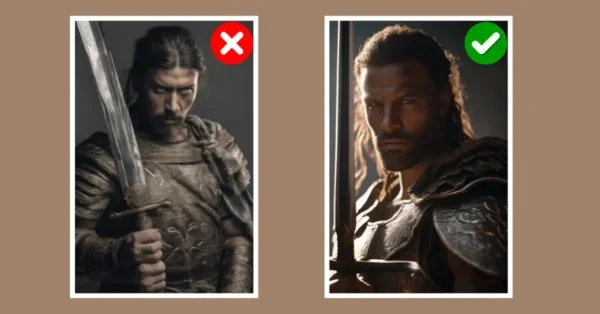
bad anatomy, extra fingers, ugly face with one targeted body-part block. That small change gives SDXL a cleaner instruction, gives Midjourney a shorter --no list, and gives Flux users a clear choice between positive anatomy wording and NAG.Cover image: image from How to Fix Bad Hands in Stable Diffusion (2026 Guide)
References
- 1Working Without Negative Prompts - Black Forest Labs
- 2NAGuidance - ComfyUI Built-in Node Documentation
- 3How to Fix Bad Hands in Stable Diffusion (2026 Guide)
- 4150+ Top Negative Prompts for Realistic AI Images (2025-26)
- 5200+ Best Stable Diffusion Negative Prompts with Examples
- 6Stable Diffusion Negative Prompts: The Ultimate Collection
- 7Stable Diffusion negative prompts
- 8Negative Prompts Explained: What They Are, How They Work, and the Best Ones to Use (2026)
- 9No - Midjourney
- 10Midjourney V8.1 + V7 Reference
- 11How to Fix Midjourney Hands: Complete Guide
- 12Universal Negative Guidance for Diffusion Models
- 13Orthogonal Negative Guidance in Attention Feature Space for Text-to-Image Generation
- 14Towards Anatomically Plausible Human Image Generation via Synthetic Localized Preferences
- 15Beginner here, how do I fix fingers - r/StableDiffusion
Add more perspectives or context around this Post.