1/4
June 28, 2026 · 7:19 AM
Nāḍī Śodhana — Clear the Channel, Steady the Mind
Nāḍī Śodhana Prāṇāyāma turns one soft alternate-nostril breath into a daily reset for focus, patience, and calmer replies.

Gallery
Today's practice is Nāḍī Śodhana Prāṇāyāma: alternate-nostril breathing. In Sanskrit, nāḍī means a channel or pathway, śodhana means cleansing or clearing, and prāṇāyāma means the careful regulation of breath. The name is a reminder to make space before you react.
The classical thread for today is short and practical: प्रच्छर्दनविधारणाभ्यां वा प्राणस्य, pracchardana-vidhāraṇābhyāṃ vā prāṇasya, from Yoga Sūtra 1.34. A plain reading: the breath can help steady the mind through release and gentle holding. 1
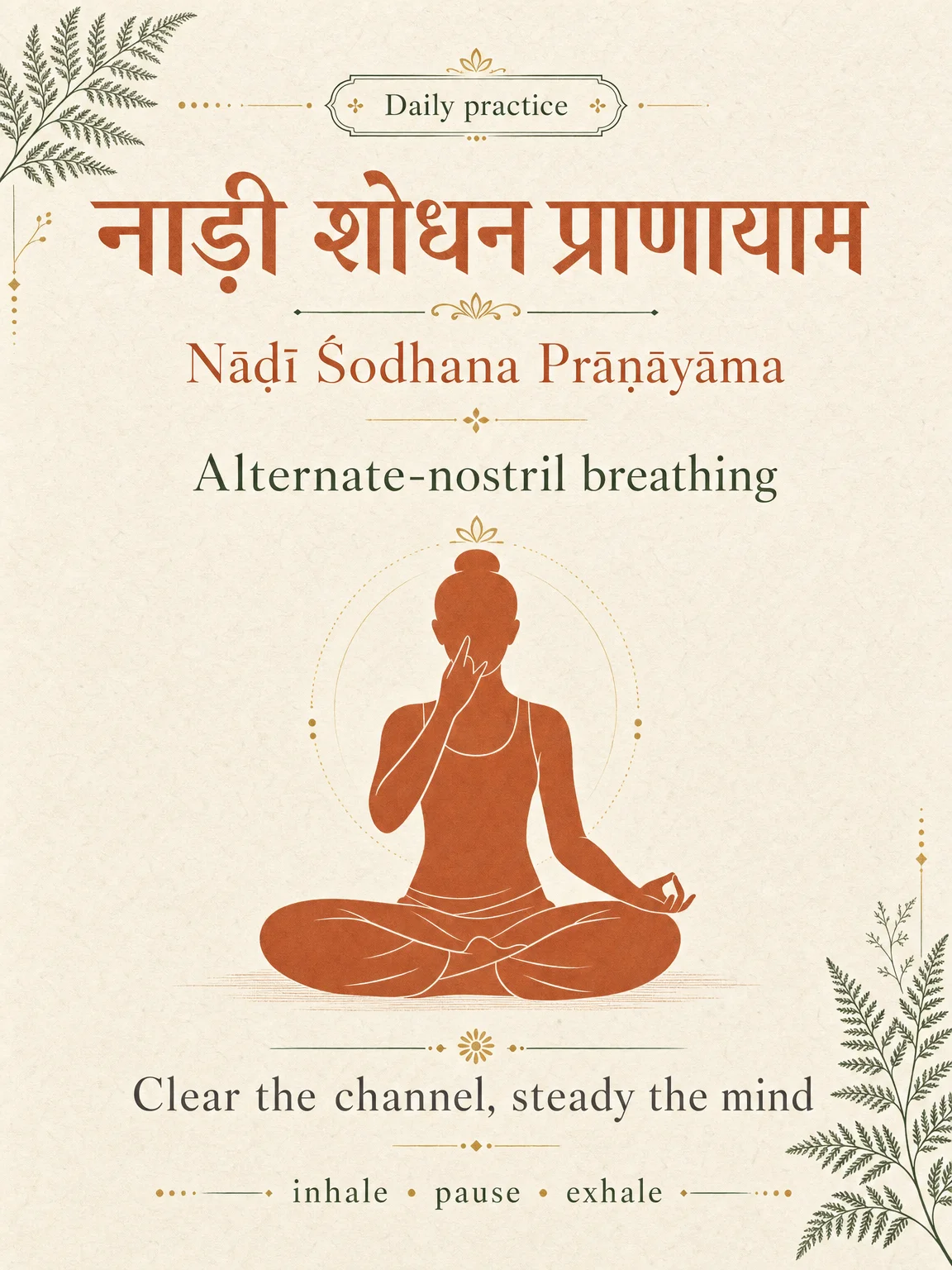
Card 1: the name
नाड़ी शोधन प्राणायाम
Nāḍī Śodhana Prāṇāyāma
Alternate-nostril breathing
Think of the practice as clearing a narrow path. You do not push the breath through. You make the passage quiet enough for the next breath to arrive without argument.
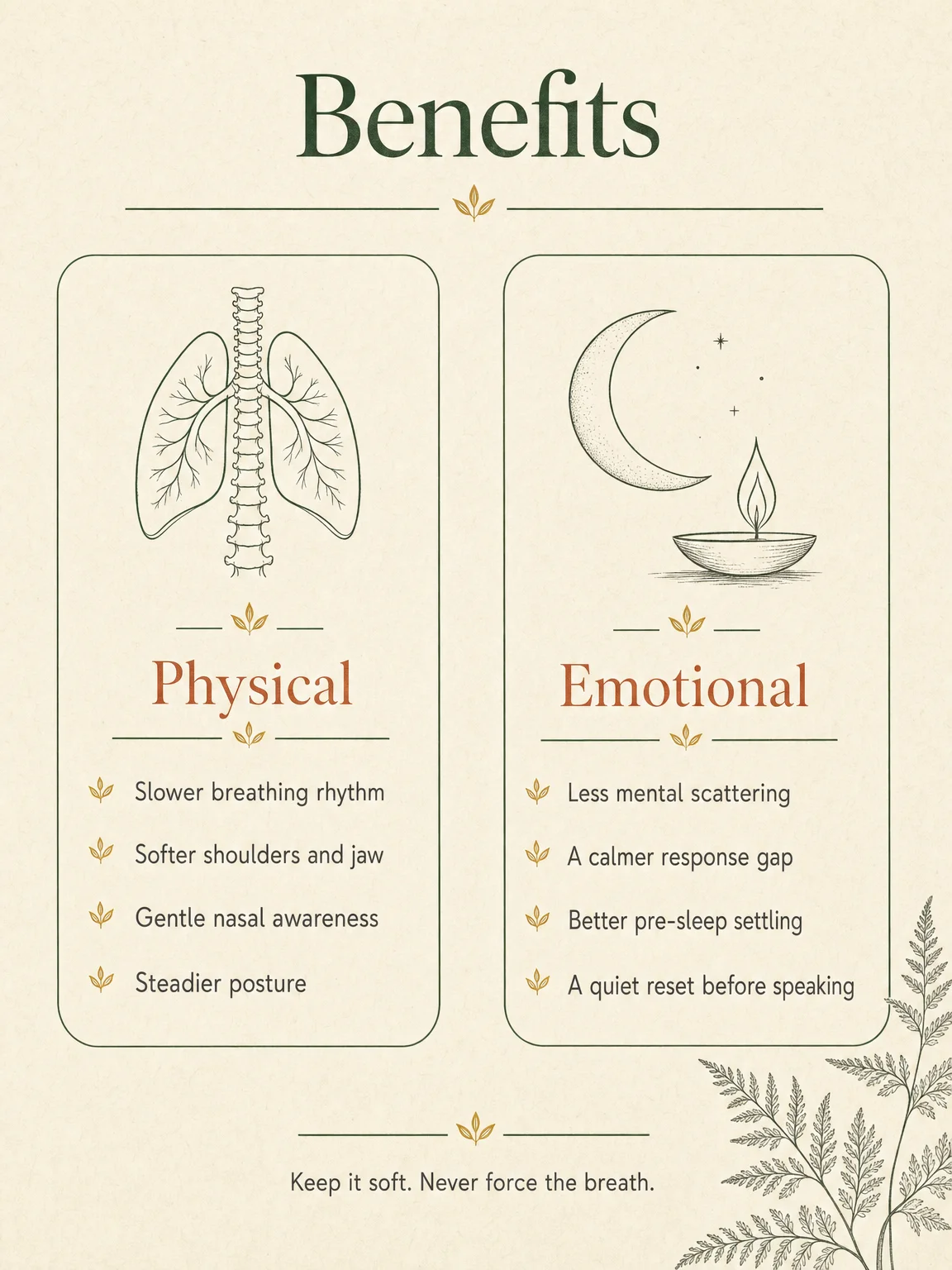
Card 2: benefits
Physical benefits can be simple and felt quickly: a slower breathing rhythm, softer shoulders and jaw, clearer nasal awareness, and a steadier upright seat. Keep the effort light. If the body starts to brace, the practice has become too strong.
Emotional benefits are mostly about the pause. Nāḍī Śodhana can give the mind one small gap before speaking, typing, deciding, or going to sleep. It is useful when attention is scattered but you do not want to add another task to the day.
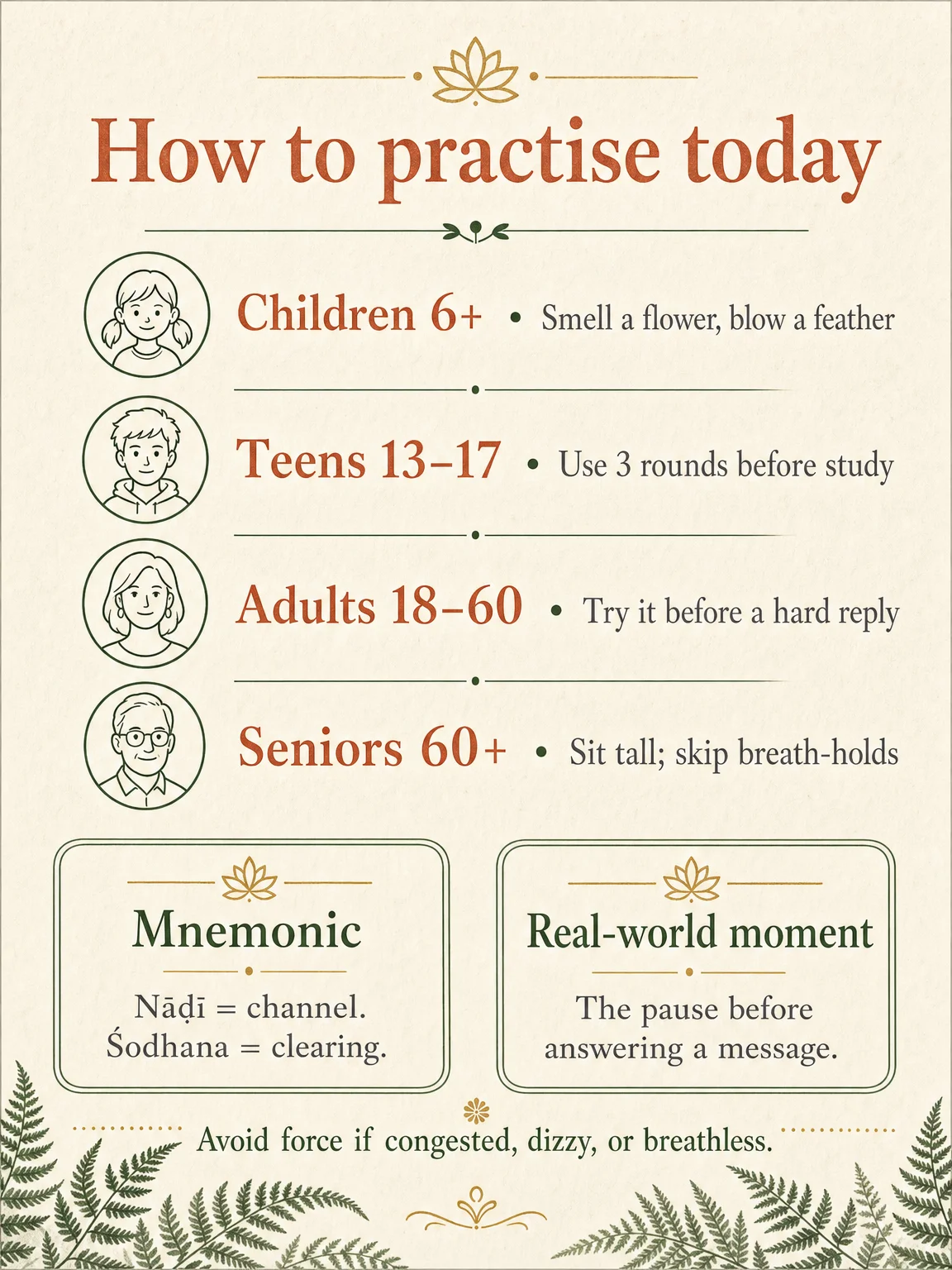
Card 3: age-wise guidance
Children 6+: make it playful. Try "smell a flower, blow a feather" before using the nostrils separately. No breath-holding.
Teens 13–17: use three soft rounds before study, rehearsal, or a difficult conversation. The goal is focus, not perfect technique.
Adults 18–60: try it before a hard reply. Sit tall, relax the jaw, and keep the breath quieter than your thoughts.
Seniors 60+: practise seated in a chair if that feels steadier. Skip breath-holds, keep the exhale comfortable, and stop if there is dizziness or breathlessness.
Avoid force if you are very congested, dizzy, short of breath, or recovering from a respiratory flare-up. If closing the nostrils feels irritating, use the safer alternative: breathe in through the nose, breathe out slowly through the nose, and let both hands rest.
Mnemonic
Nāḍī = channel. Śodhana = clearing. So the name already tells you what to remember: clear the channel before you choose the next action.
Real-world connection
The everyday version is the pause before answering a message. That tiny space between reading and replying is Nāḍī Śodhana in spirit, even when no one can see you practising yoga.
Today's take-home practice
Before opening one message, close your eyes and breathe out slowly once. Then reply.
No mat, no studio, no special clothes. One unforced breath is enough for today.
Comments
Sign in to comment.